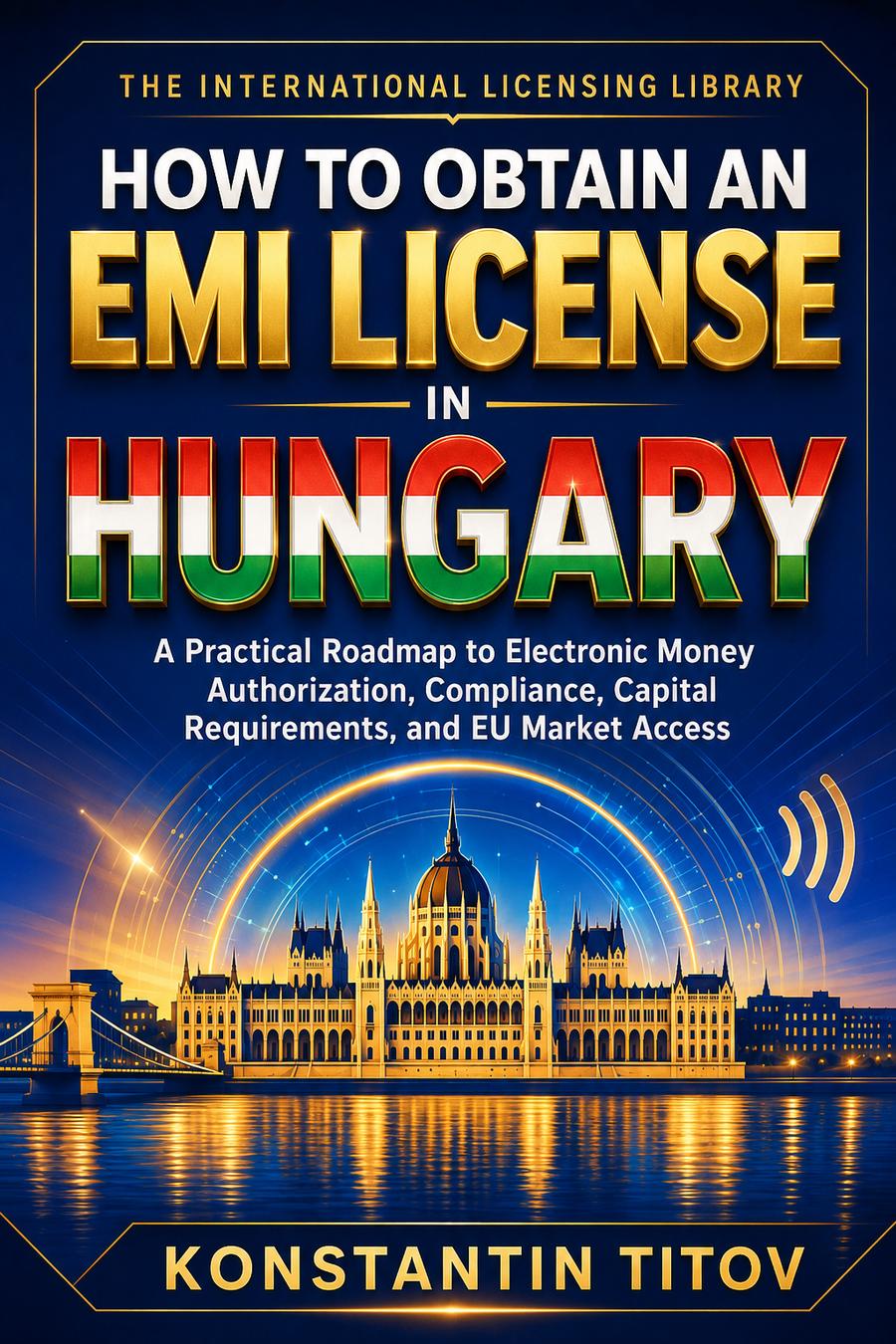
Book Description
An EMI license can authorize a financial institution. It cannot, by itself, secure a safeguarding bank, connect a card program, create payment-system access, establish operational resilience, or unlock every European market.
How to Obtain an EMI License in Hungary is a practical guide for fintech founders, investors, payment executives, lawyers, compliance professionals, and technology leaders seeking to understand the complete journey from business-model design to Magyar Nemzeti Bank authorization and regulated operations.
The book begins by dismantling the “one-license” illusion. Wallets, payment accounts, cards, named IBANs, merchant acquiring, currency conversion, and cross-border services may appear within one application, but they can involve different regulated activities, contractual relationships, infrastructure providers, and legal responsibilities.
Across ten detailed chapters, readers will learn how to:
• determine whether an EMI, payment institution, bank partnership, or technology-only structure fits the proposed product;
• distinguish electronic money from deposits, payment accounts, commercial balances, and limited-network value;
• design a Hungarian company with transparent ownership, credible governance, qualified management, and genuine operational substance;
• understand initial capital, continuing own funds, safeguarding, liquidity, operating runway, and wind-down financing;
• prepare a coherent MNB application supported by evidence rather than generic policy templates;
• establish safeguarding, reconciliation, treasury, redemption, and financial-control arrangements;
• build practical AML, sanctions, fraud, customer-protection, and complaints frameworks;
• manage technology, cloud providers, outsourcing, cybersecurity, incident response, and DORA obligations;
• evaluate consultants, banks, processors, card partners, and other critical providers;
• plan realistic licensing, passporting, integration, testing, launch, and ongoing-supervision timelines.
Realistic scenarios show how apparently minor decisions concerning customer contracts, account ownership, ledger control, refunds, settlement, outsourcing, and branding can change the regulatory character of a product.
The book also explains why authorization and market access are not the same. A Hungarian EMI may use European passporting procedures for authorized activities, but successful expansion still depends on notifications, host-market obligations, operational readiness, commercial partners, and infrastructure availability.
Rather than promising shortcuts or guaranteed approval, this guide provides a structured method for building an institution capable of answering the questions regulators, banks, auditors, investors, and customers are likely to ask.
It is a roadmap not merely to obtaining permission, but to creating an electronic money institution that can operate responsibly after the license is granted.
This publication is intended for educational and strategic purposes and does not constitute legal, regulatory, tax, investment, or financial advice.